Biblical exposition
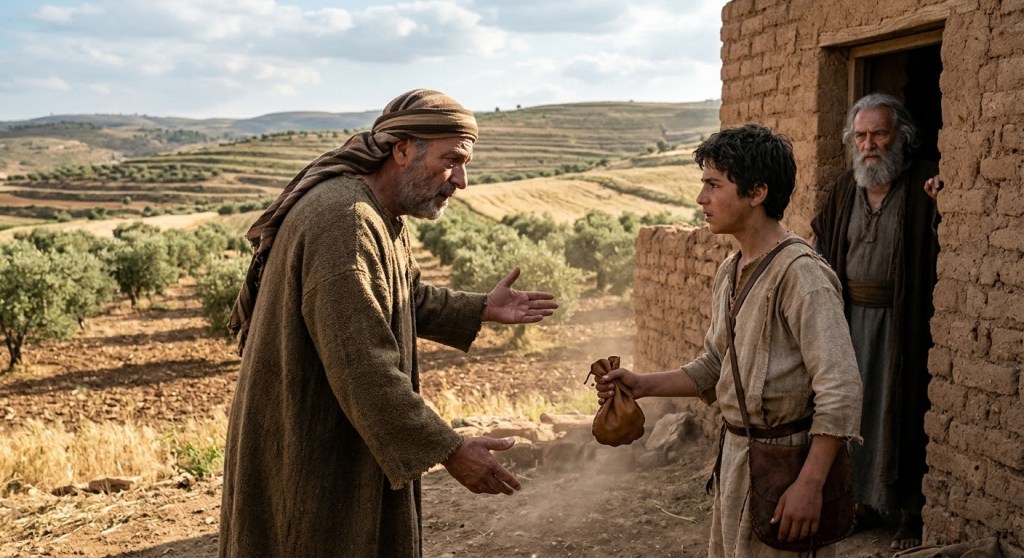
Jesus describes a younger son demanding his inheritance while his father is still alive. Keller explains how shocking this request would have been in the ancient Middle Eastern world.
The father’s land was not simply property or money. It represented his identity, family standing and place in the community. Selling a third of it meant sacrificing a significant part of his life.
Illustration:
Keller uses a line from the musical Oklahoma! to help modern listeners understand the ancient relationship between a family and its land.
> One commentator, Kenneth Bailey (a scholar who knows something about the history and culture of the time) put it like this: “To ask for the inheritance while the father is still alive is to wish him dead.”…We do not understand the relationship that people in the past had to their land…to their land. This father’s estate was his land…his wealth was his land. He would have had to sell off a third of his land to give his son that part of the estate.Now if you really want to understand this you could always read a lot of books, like those of Wendell Berry. But, if you would like a little bit briefer glimpse you can always look at the musical Oklahoma…of Rogers and Hammerstein.One of the lines in the theme song goes like this:”Oh we know we belong to the land. And the land we belong to is grand.”Do you notice what it says? The land we belong to. It doesn’t say the land belongs to us. We belong to it. We don’t understand that. But ancient, Middle Eastern families identified with their land. Their very identity was bound up with the land. To lose your land was to lose yourself…and to lose part of your land was to lose your standing in the community…and that standing was tied to how much land you had.
Tim Keller, The land we belong to
The illustration’s point
The younger son was not merely asking for money. He was asking his father to sacrifice part of his identity, reputation and standing in the community. His request was effectively saying: I want your possessions, but I don’t want you.


Leave a Reply